Such is life
Crossing Latin-America



[ Home ] [ planned ] [ experienced ] [ moved ] [ happened ] [ visited ]

A short trip through Brazil
|
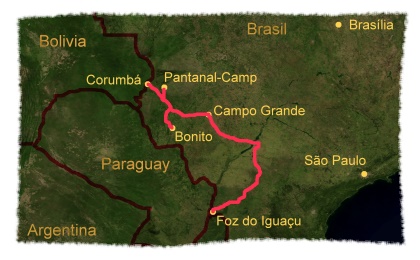
'Short' in this case is refering to the amount of time (10 days) it took us to do this trip, not to
the distance (1900 km)! If Argentina is big, Brazil is gigantic! The first night trip by bus to Campo Grande
made it obvious. Furthermore going by bus, but also all the other things are a lot more expensive than
in the other countries we visited so far. So we decided to do only this short trip and then make our
way to Bolivia.
|
 |
|||
|
But before we left this 'three country corner' we had to visit another highlight in Foz do Igauçu -
no, not the falls but the Itaipú hydroelectric project right on the border between
Brazil and Paraguay. In 2006 still the biggest hydroelectric power plant in the world with a power of 14.000
mega watts. The joint venture between Paraguay and Brazil provides energy equally to the two countries.
90% of paraguayan needs and 25% of the brazilian needs are covered. Some statistics:

Get a hotel Exit stamp for Brazil at the bus terminal Entry stamp for Bolivia at the border By taxi to the bolivian train station to get the tickets A fast cold beer in Bolivia Back to Brazil A shower, a pizza, a sleep and the next day furtheron to Bolivia | ||||
|
last update: October/25/2006 |
||||