Our first city after crossing the border was Salta. The planned trip with the 'Tren a las Nubes' could
not take place (the train should leave again in July - maybe??? or maybe not). Instead we rented a car
and discovered the nearby canyons and landscape by car. Furthermore for the first time after almost
7 months we were able to enjoy the amenities of 'civilisation' again. Concerning culture and food,
Argentina is the most developed country in Latin-America. Wonderful food, very good wine, super service
every-day-live-music in nice restaurants with really cheap prices - that was given to us by the city
of Salta - La Linda (the belle, how they call it in Argentina). This was really like arriving in heaven.

From Salta we went on to Tucumán, the city in which the Argentinans declared their
independance in 1816.
Just a short digression: For us it was very hard to get used to the go-out-times in Argentina. Dinner (the main
meal of the day) is not eaten out before 09.30 pm, most times not before 11.00 pm. The restaurants do not
open before 09.00 pm, only very few a about 08.00 pm.
At this time we already went o bed in the countries, we visited before on our trip. Mainly because
there, the main meal is lunch and after sun set one should not walk through the cities anymore.
That is different in the argentinan cities and even at 01.00 am there are normally lots of people
in the street. We had some problems to get used to it and often were the only guests in the restaurants.
But to go on: We should have skipped our short trip to Taffi del Valle, because in autumn there is
really nothing to do there, almost everything is closed and there is bad weather, too. Good luck we
found a restaurant, where we had a superb grilles goat. So the evening was saved and the next morning we went
back to Tucumán.
Our next way should lead us to La Rioja. We wanted to rent a car and wanted to visit the National
Parks of Talampaya and Ischigualasto. But on our arrival in La Rioja we both had the same thoughts in
mind:"Why must we get out of the bus here?". Also the car rental prices were more than double the prices
of Salta. Ok, just a short night and then we went furtheron to Mendoza.
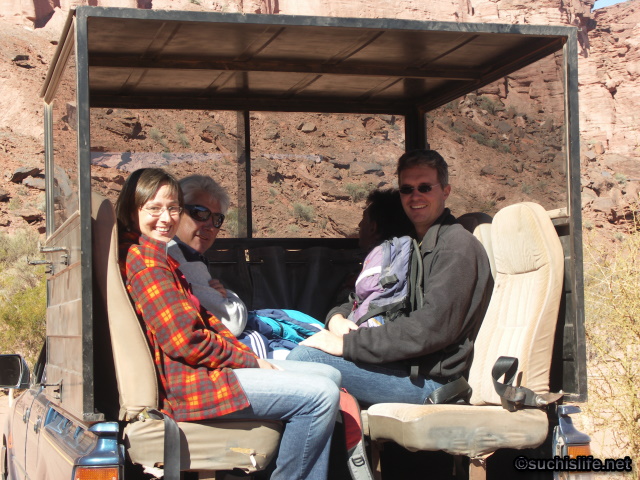
In Mendoza we had cheap car rentals again and were able to start our trip to the National Parks from
here. Although the way to go was far longer than from La Rioja, the trip was worth it a 100 percent.
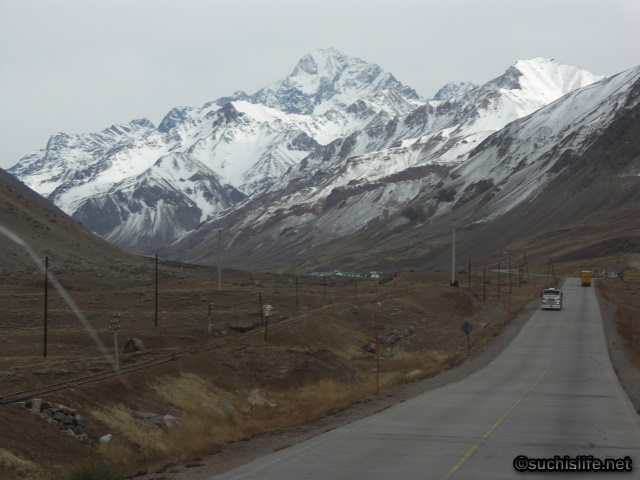
The trip to the High Andes instead was not really worth it, because some days later on our trip to
Chile we almost did the same road again. Nevertheless is was interesting to be entertained for one
day without having to organise the trip on our own.

There are other things which changed in Argentina, too: There are cafes in the streets again, where
you can have a nice Cortado (coffee) and some Medialunas (literally half moon or more common:
croissants) and sit for a few hours, talk and just watch the people walking by. By the way one of the
favorite things to do for Argentinos.
And ... there are real shops (especially bookshops) again. (Un-)Fortunately because of our fully packed
backpacks we were not allowed to buy anything.
By the way: We did not forget, that Mendoza is the wine capital of Argentina. Our wine experiences
are collected in one of our reports.

The pass between Argentina and Chile reaches up to about 3300m. In winter it is easily possible,
that it must be closed because of snowfall. That's why we decided to cross early to Chile. We didn't
want to miss our flight to Easter Island. That wasn't an easy decision, because Chile is much more
expensive than Argentina. Furthermore the cities in Chile are not as nice as the ones in Argentina.
But we made the right decision: As they told us in Santiago, the pass was closed only a short time
after our crossing because of snowfalls. We hope, that it will be open again when we come back from
the Easter Island.
Compared to the other cities in Chile Valparaíso, right at the shore of the Pazific Ocean,
has something special to offer:
15 elevators or to be more precise: funiculars, each about a hundert years of age, link the downtown of
Valparaíso with the upper parts of the city. But also Viña del Mar right next to
Valparaíso, with its nice beaches invites you to have a short walk on the shore.
Arriving in Santiago we killed our time with cinema, strolling around and the soccer world championship.
We have been to Santiago some years ago and there was nothing new to discover.